North Carolina Claim of Lien Against Construction Funds
County Specific Legal Forms Validated as recently as October 14, 2026 by our Forms Development Team
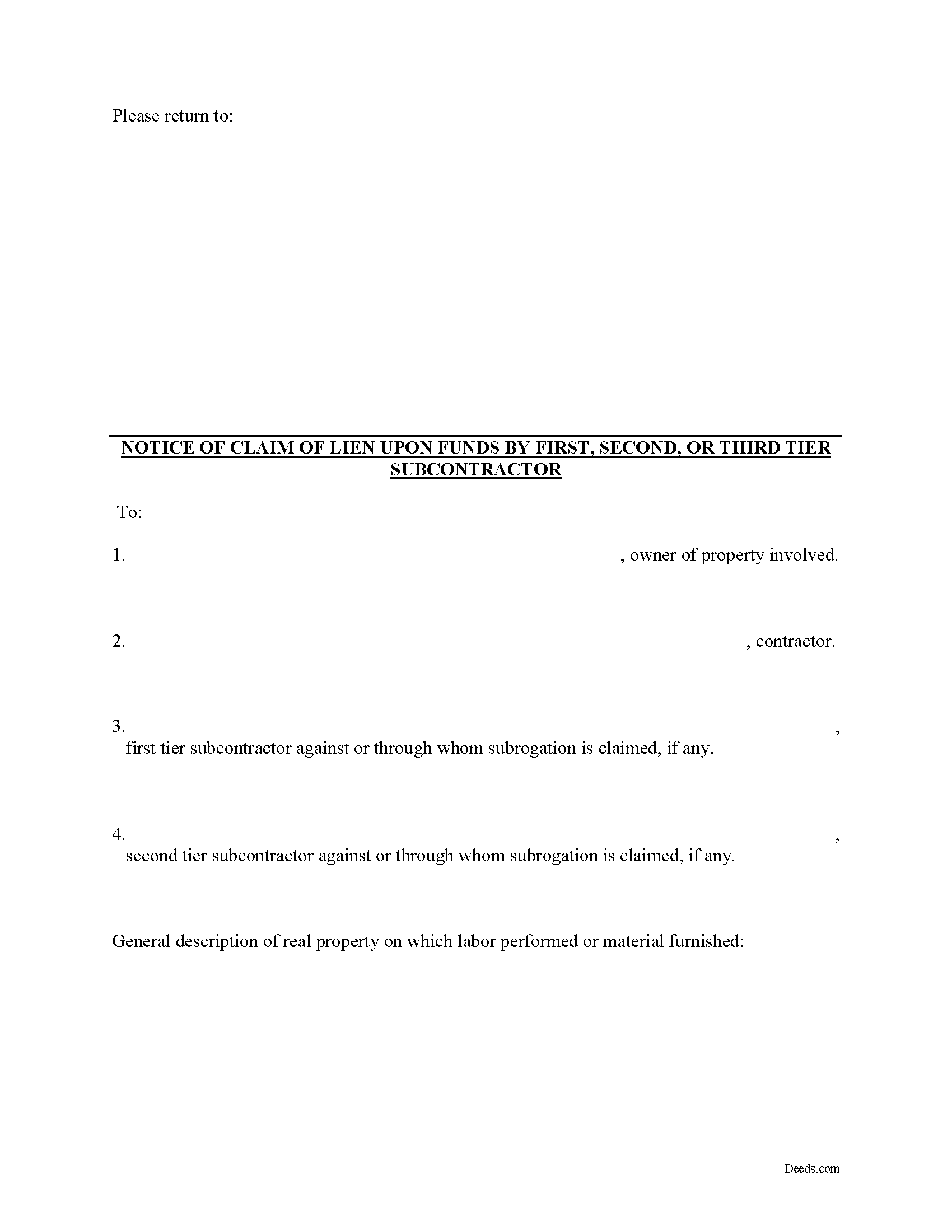
About the North Carolina Claim of Lien Against Construction Funds
How to Use This Form
- Select your county from the list
- Download the county-specific form
- Fill in the required information
- Have the document notarized if required
- Record with your county recorder's office
What Others Like You Are Saying
"It worked great- I had a little trouble at first with the site, figuring out where to do what, but t…"
"Straight forward, very fair price with excellent instructions and example. I am very pleased with yo…"
"Was very simple to use and the email communication was very efficient. Appreciated getting my docume…"
"Thank you for being there for me when I couldn't get it done myself. I was a little confused with th…"
"Website easy to use and explanations available"
4.8/5 from 4,832 reviews. Read all
Claiming a Lien Against Construction Funds in North Carolina
In addition to claiming a lien against a real property, contractors can also lien on construction funds regardless of tier. Therefore, a subcontractor has lien rights against any funds that are owed to the party that hired the subcontractor. A lien can be claimed to the extent money is owed to the party occupying the position in the chain above the subcontractor. N.C.G.S. 44A-18.
The subcontractor's right to a lien becomes ripe as soon as labor or materials are first furnished on the job and relates back to the date the contractor or supplier first furnished labor, services, or materials on the project.
The notice of a claim of lien upon funds must set forth all of the following information: (1) the name and address of the person claiming the lien upon funds; (2) a general description of the real property improved; (3) the name and address of the person with whom the lien claimant contracted to improve real property; (4) the name and address of each person against or through whom subrogation rights are claimed; (5) a general description of the contract and the person against whose interest the lien upon funds is claimed; and (6) the amount of the lien upon funds claimed by the lien claimant under the contract. N.C.G.S. 44A-19(a).
The notice must also be served on the obligor (debtor) by personal delivery or in any manner authorized by Rule 4 of the North Carolina Rules of Civil Procedure. N.C.G.S. 44A-19(d). A copy of the notice of claim of lien upon funds shall be attached to any claim of lien on real property filed pursuant to G.S. 44A-20(d). Id.
This article is provided for informational purposes only and should not be relied upon as a substitute for the advice of a legal professional. Please contact an attorney with questions about claiming a lien on funds, or any other issues related to liens in North Carolina.
Important: County-Specific Forms
Our claim of lien against construction funds forms are specifically formatted for each of the 100 counties in North Carolina.
After selecting your county, you'll receive forms that meet all local recording requirements, ensuring your documents will be accepted without delays or rejection fees.