Delaware Certificate of Trust
County Specific Legal Forms Validated as recently as October 22, 2026 by our Forms Development Team
About the Delaware Certificate of Trust
How to Use This Form
- Select your county from the list
- Download the county-specific form
- Fill in the required information
- Have the document notarized if required
- Record with your county recorder's office
What Others Like You Are Saying
"This was a complete set of the necessary forms, with instructions. It will be very useful. Instant d…"
"Great, but I'd like to see the actual filings/documents in my account, PDF, not only the blank forms…"
"Absolutely amazing throughout the whole process"
"KVH provided excellent customer service (great communication was provided). I would differently use …"
"First time using DEEDS.COM and very helpful with documents to fill out. I highly recommend this comp…"
4.8/5 from 4,833 reviews. Read all
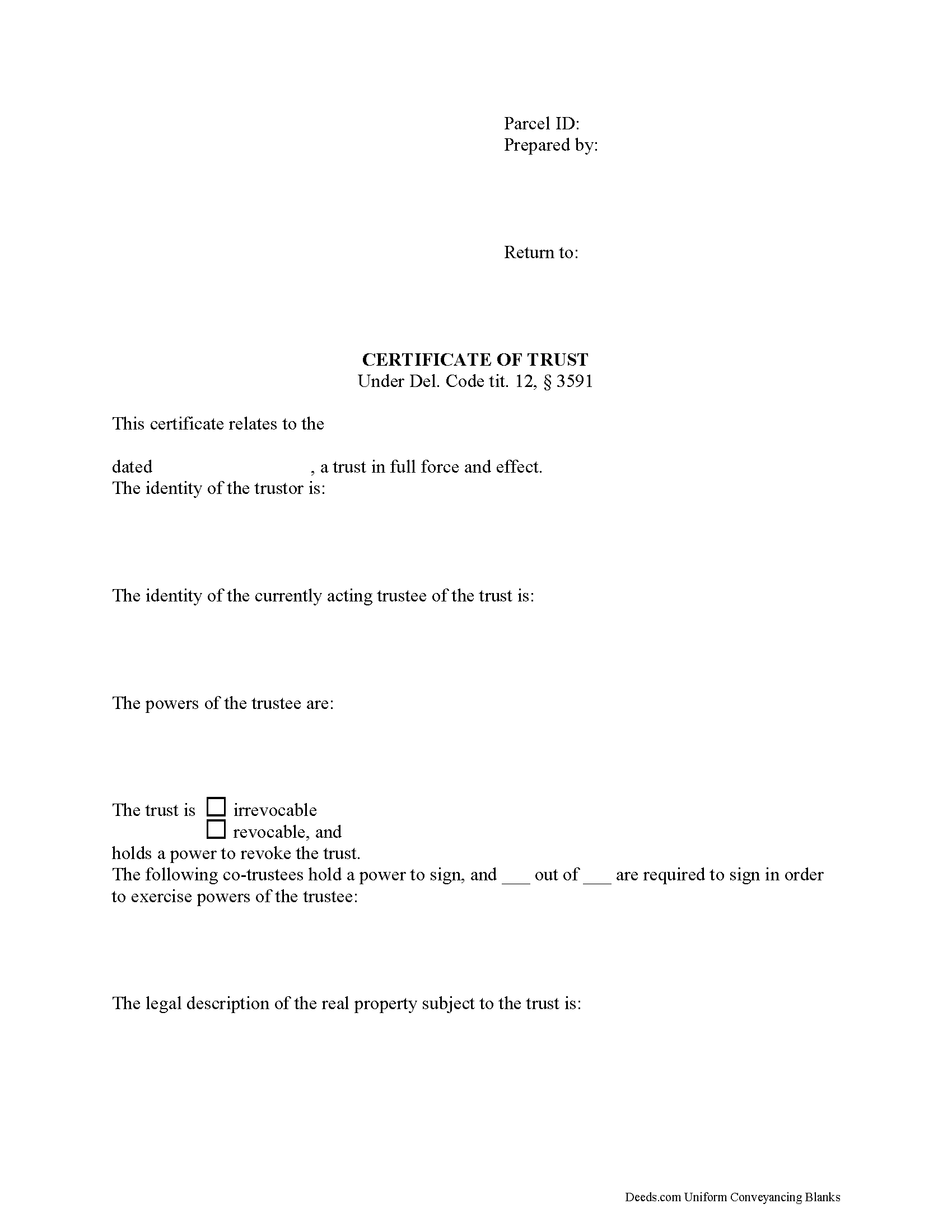
Under Del. Code tit. 12, 3591 a certification of trust presents essential information about an existing trust. Instead of providing the entire trust instrument to people who do not have a beneficial interest in the trust, the fiduciary using the certificate ensures that irrelevant or personal information remains undisclosed.
The basic information provided by the certificate includes the trust's name and date, the identity of the trustor funding the trust, and whether or not the trust is revocable, including who is able to revoke the trust. The certificate also clarifies the name by which the trust is to vest title to assets.
The certificate also validates the trustee's authority to act on behalf of the trust by naming the acting trustee, enumerating the powers of the trustee relevant to the transaction at hand, and identifying the signing authority of co-trustees, if applicable. The recipient of a certification may request copies of excerpts from the trust instrument naming the trustee and establishing the trustee's powers, but doing so opens up certain liabilities (Del. Code tit. 12, 3591 (e),(h)).
A certificate of trust also contains the trust's taxpayer ID. This number is either a trustor's social security number, or an employer identification number issued by the IRS, depending on the type of trust. If the certificate is submitted for recording, this information can be redacted pursuant to Del. Code tit. 9, 9627.
Pursuant to Del. Code tit. 12, 3591(c), the certificate requires a statement that the trust has not been revoked, modified or amended in any way that would negate the representations contained within. The document serves as prima facie evidence of the facts presented, and a person relying upon a certification of trust can enforce the subject transaction against the trust property as if the representations contained in the certification were correct (Del. Code tit. 12, 3591(g)).
As with other instruments affecting real estate, include the legal description of the subject property. The certificate is signed by any acting trustee in the presence of a notary public. The preferred format for recorded documents varies across the three Delaware counties, so make sure the certificate's borders and layout meet local requirements.
Note that this instrument is separate from a certificate of statutory trust (under Del. Code tit. 12, 3810). Each case is unique, so contact an attorney with any questions or for complex situations.
Important: County-Specific Forms
Our certificate of trust forms are specifically formatted for each of the 3 counties in Delaware.
After selecting your county, you'll receive forms that meet all local recording requirements, ensuring your documents will be accepted without delays or rejection fees.